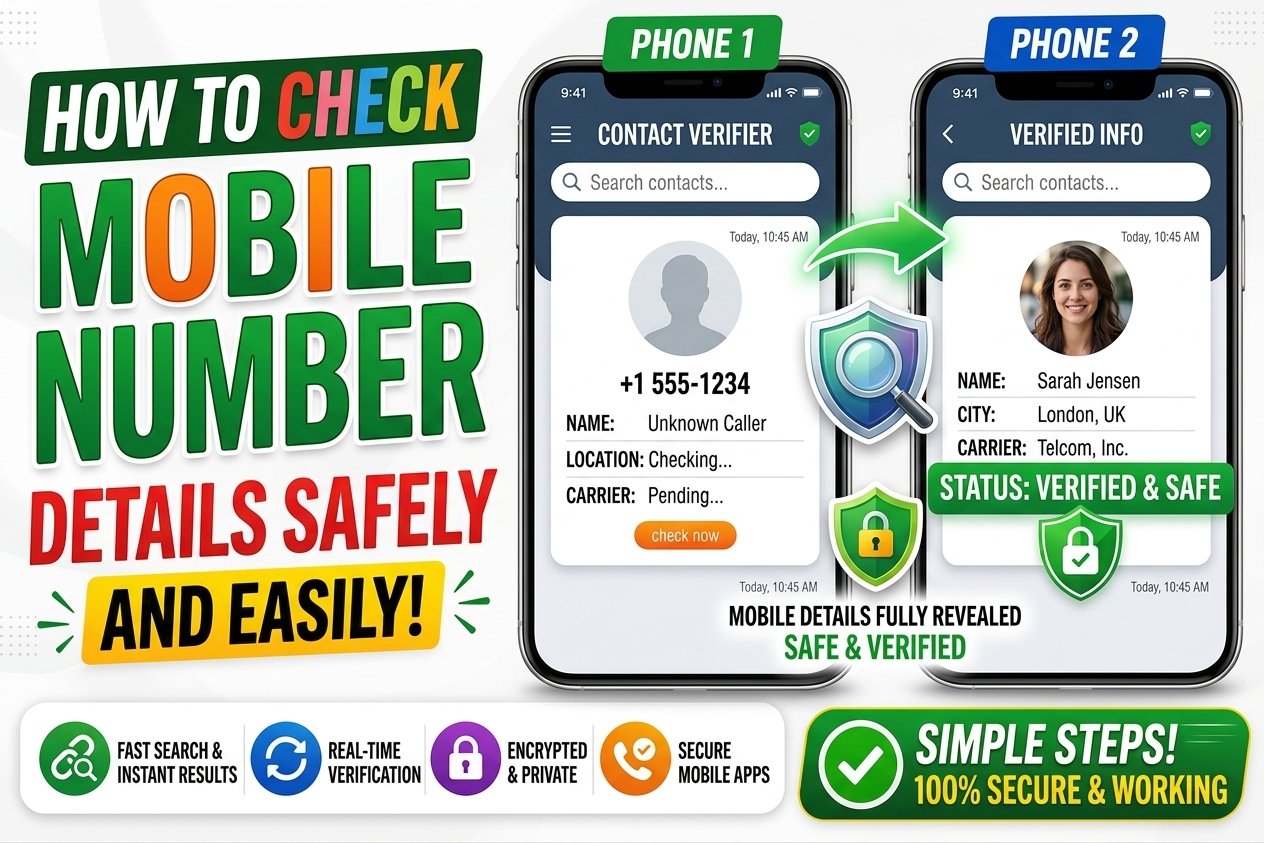
Have you ever received a call from an unknown number and wondered who was calling? Many people receive spam calls, suspicious messages, and unknown calls every day.
The good news is that there are safe and legal ways to check basic mobile number details. You do not need hacking tools or unsafe websites to get useful information.
In this guide, you will learn what mobile number details mean, what information you can check, and how to identify unknown numbers safely and easily.
What Are Mobile Number Details?
Mobile number details refer to basic information connected to a phone number. Many people believe that entering a number online will show the owner’s full name, home address, ID card details, or live location.
However, private information is protected by privacy laws.
Depending on the number and service, you may be able to find basic information such as the country code, mobile network, public business information, or spam reports.
Official SIM registration details are private and should only be accessed through authorized telecom services.
Why Do People Check Mobile Number Details?
People check mobile number details for many different reasons. Here are some common ones:
To identify unknown callers. You may receive a call from an unfamiliar number and want to know whether it is safe to answer.
To avoid scams. Checking a suspicious number may help you identify spam or fraud.
To verify a business. Before contacting a company or sending money, you may want to confirm that the number belongs to a real business.
To report harassment. If someone is repeatedly calling or sending unwanted messages, basic information can help when reporting the problem.
To protect your identity. You can also check your own SIM information to make sure your identity is not being misused.
Safe Methods to Check Mobile Number Details
1. Use Caller Identification Apps
Caller identification apps can help you identify unknown numbers. These apps collect publicly available information and reports from users.
They may show:
- A possible caller name
- Business information
- Spam warnings
- User reports
Apps such as Truecaller can be useful for identifying suspicious or unwanted callers.
However, the information shown may not always be correct, so do not treat it as official proof of someone’s identity.
2. Search the Number Online
You can search a mobile number using a search engine. Sometimes businesses publish their contact numbers on official websites, social media pages, or online directories.
If the number belongs to a public business, you may find:
- Business name
- Official website
- Social media account
- Customer support information
This method works best for business and publicly listed phone numbers.
3. Check the Country Code
Every international phone number has a country code. Checking the country code can help you understand where a call may be coming from.
For example, an international number usually starts with a plus sign followed by a country code.
This method can provide general information but cannot tell you the private identity of the person using the number.
4. Check Messaging Apps
Some messaging apps may show a profile name or picture when you save a number to your contacts.
This can sometimes help you recognize a person, especially if the number belongs to someone you already know.
However, profile names and photos can easily be changed. Always verify important information through trusted sources.
5. Contact Your Mobile Network Provider
If you want to check details about your own mobile number, your telecom provider is one of the safest options.
Your network provider can help you:
- Verify your SIM registration
- Check account information
- Report suspicious activity
- Block unwanted numbers
- Report spam or fraud
They may ask you to verify your identity before giving you information about your own account.
Telecom companies normally cannot provide another person’s private registration details to the public.
6. Report Serious Cases to Authorities
If you are receiving threats, harassment, blackmail, or scam calls, do not try to find private information yourself.
Save useful evidence, including:
- Call logs
- Screenshots
- Messages
- Dates and times
Then report the problem to your telecom provider or local authorities.
Authorities can legally request subscriber information when necessary for an investigation.
What Information Can You Check?
You may be able to find basic information such as:
- Country or region code
- Network information
- Public business details
- Spam reports
- User-submitted caller names
However, you should not expect public websites to legally provide:
- Official SIM registration records
- National ID details
- Home addresses
- Bank information
- Private call records
- Live location
If a website promises to show all this private information instantly, it may be unsafe or unreliable.
What You Should Never Do
Some websites promise to reveal complete details about any mobile number. They may claim to show names, addresses, ID information, or live locations.
Be careful with such websites.
Avoid:
- Hacking tools
- Leaked databases
- Suspicious mobile apps
- Websites asking for your OTP
- Services selling private information
- Unknown websites asking for personal details
These services can put your privacy and personal information at risk.
Always use official and trusted sources.
Pros and Cons of Checking Mobile Number Details
Pros:
- Helps identify unknown callers
- Can protect you from spam and scams
- Useful for checking public business numbers
- Helps you report suspicious activity
- Easy to check basic information
Cons:
- Private information is not publicly available
- Caller identification results may be incorrect
- Some websites provide false information
- Fake tools may steal personal data
- Not every number can be identified
Practical Tips to Stay Safe
Use trusted sources. Always use official telecom services and trusted caller identification apps.
Never share your OTP. Your OTP and passwords should always remain private.
Avoid suspicious links. Do not open links sent by unknown numbers.
Block unwanted callers. Most smartphones allow you to block suspicious numbers easily.
Save evidence. Keep screenshots and call logs if you need to report a number.
Verify important information. Do not trust one app or website completely. Always confirm important information through official sources.
Conclusion
Checking mobile number details can help you identify unknown callers, avoid scams, and verify public business contacts.
However, it is important to remember that private SIM registration information is protected by law. Public tools can only provide limited or publicly available information.
The safest option is to use trusted caller identification apps, official telecom services, and your mobile network provider.
Avoid websites that promise to reveal someone’s complete private information. By using safe and legal methods, you can protect yourself while respecting the privacy of others.